


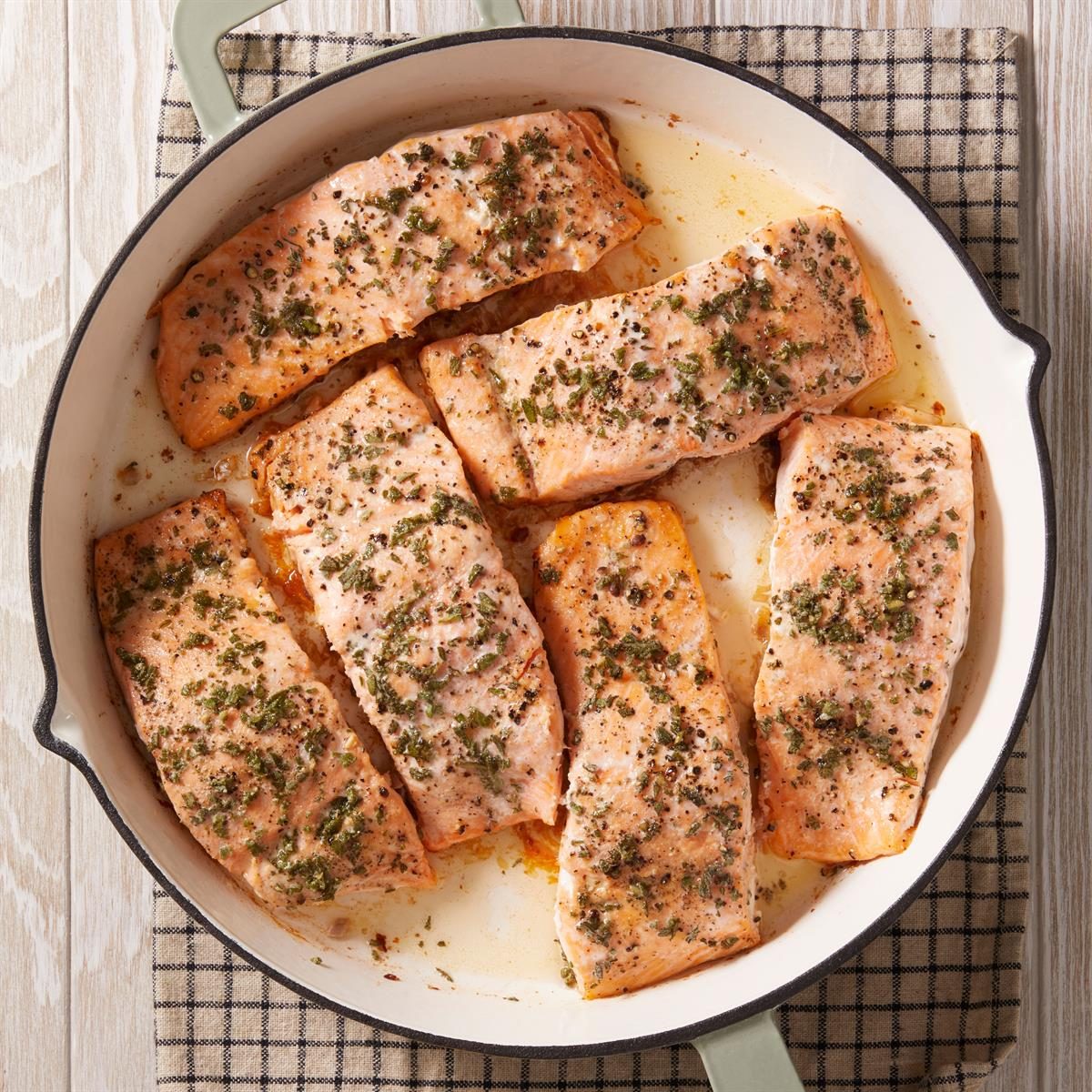
Pan-roasted sage salmon brings out lovely herbal flavors, creating beautifully flaked fish with minimal effort and mess.
Perfectly cooked salmon has such rich juiciness that it deserves to be served at a candlelit dinner, but it’s just as easy to pull off for a last-minute weeknight meal. The secret lies in the pan-roasting cooking technique. Start skin-on salmon in a skillet on the stovetop, then transfer it to the oven to finish cooking it effortlessly and evenly, without drying it out.
Sage salmon uses this technique to quickly cook the fish with minimal mess and to let fresh herb flavor seep into the fillet. Sage is in the mint family but has a cedar-like aroma and an earthy taste, especially when you heat the fresh leaves. This perennial plant is one of the best herbs to grow indoors for a steady supply. Pluck and mince just a few leaves for this recipe, leaving plenty of fresh sage to infuse a Thanksgiving turkey brine or to fry as a garnish for Hasselback butternut squash.
Sage Salmon Ingredients
- Sage: Fresh sage complements the taste of salmon. Mince it just before you mix it with the other seasonings. Fresh tastes best with this salmon and sage recipe, but if you must use ground sage, you’ll want to use less. The general rule for fresh-to-dried herb conversion is 3 teaspoons fresh to 1 teaspoon dried.
- Other seasonings: Garlic powder, salt and pepper are standard ingredients in a dry rub, a seasoning blend and technique popular when grilling, but they work equally well when pan-roasting salmon. The salt in particular brings moisture to the surface of the fish flesh and helps it develop a light crust in the oven.
- Salmon: Choose a skin-on salmon fillet that weighs about 1-1/2 pounds and divide it into standard 4-ounce portions. Of the various types of salmon, sockeye, thick fatty king or Chinook salmon creates the most colorful and sustainable portions.
- Olive oil: Hot oil quickly sears the skin side of salmon, minimizing sticking. If you’re worried about making the kitchen smoky while the pan is on the stovetop, use virgin or extra-light olive oil, which has a higher smoking point than extra virgin olive oil, or choose canola or sunflower oil, which are among the best oils for frying fish.
Directions
Step 1: Season the salmon
Preheat the oven to 375°F. Mix the fresh sage, garlic powder, salt and pepper, and then rub the mixture onto the flesh side of the salmon. Cut the fish into six portions.
Editor’s Tip: To create skin-crisp pan-roasted fish, pat the skin side as dry as possible with a clean towel or paper towels. Flip the fillet over onto a dry place on your cutting board, rub the herb mixture into the flesh and flip it back to expose the skin again. Use a large, sharp knife, and slice straight down through the salmon skin and flesh to cut portions cleanly.
Step 2: Pan-sear the salmon
In a large cast-iron skillet, heat the oil over medium heat. Add the salmon portions, skin side down, and cook undisturbed for five minutes.
Editor’s Tip: An oven-safe stainless or carbon steel skillet also works for this salmon recipe. Cook in batches if your skillet isn’t large enough to comfortably hold all six portions. To minimize sticking, preheat the oil until shimmering before you add the fish. Then, carefully lower each portion away from you so that the hot oil doesn’t splash.
Step 3: Finish the salmon in the oven
Transfer the skillet to the oven and bake just until the fish flakes easily with a fork, about 10 minutes. If desired, serve with lemon wedges.
Editor’s Tip: Salmon continues to cook after you remove it from the heat, so pull it out of the oven when it starts to flake—or take its temperature. As soon as the thickest part registers about 140° on an instant-read thermometer, it’s ready.

Sage Salmon Variations
- Enhance the dry rub: Add other fresh herbs like parsley, oregano, rosemary and thyme, similar to this fresh herb rub recipe. Mix in 1/2 teaspoon smoked paprika and a pinch of cayenne for a bit of smoky heat. Stir up to 1 tablespoon brown sugar into the rub for a bit of sweetness and to caramelize the salmon’s surface.
- Give it a garnish: Use more delicate herbs, like slivered basil, sorrel or minced chives, as a garnish over the fish after you plate each portion. While the fish is in the oven, saute thinly sliced circles of shallot until crispy for a crunchy, slightly sweet topping. Sprinkle crumbled blue cheese or Gorgonzola over each portion for creamy savoriness.
- Serve it with a sauce: For a bold sauce that pairs well with sage, dollop a spoonful of cranberry pear relish onto each fish portion. Mix a tart apple with a minced red onion and toasted chopped walnuts, and toss everything with lemon juice to create a quick sweet-and-savory salsa to serve alongside the fish. Hold back some of the sage from the rub and make a brown butter sauce, as you would for ravioli, to drizzle over the salmon.
How to Store Sage Salmon
Refrigerate leftover salmon and sage with or without the skin. Arrange the portions side by side in a shallow airtight container to more easily transfer them to a pan when you reheat them.
How long does sage salmon last?
Sage salmon lasts for three to four days in the refrigerator. The skin will soften and lose its crispness, but you can restore it when you reheat the fish.
How do you reheat cooked salmon?
Reheat skin-on cooked salmon in a hot, lightly oiled skillet. Place the salmon in the pan skin side down until it becomes crisp again but not burnt, and then flip the fish to warm the flesh. To crisp the skin of leftover cooked salmon without oil, reheat it in an air fryer with the skin touching the basket. Reheat skin-off salmon in a 275° oven until heated through. Let the salmon return to room temperature first, and cover the pan to hold in moisture while it warms. Avoid reheating the fish more than once so it stays moist and tender.
Sage Salmon Tips

Can you cook salmon without the skin?
You can cook salmon without the skin, but leaving it on makes the salmon less likely to fall apart when pan-searing. The skin also helps hold in juices and protect the fish flesh from the pan’s direct heat, making it less likely to dry out. Salmon skin will crisp up as the fish cooks and separate easily from the meat. A thick fatty layer lies between the salmon skin and flesh, making this one of the richest areas of omega-3 fatty acids, and it’s all edible; try crumbling the crisped skin over a tossed salad to serve with the fish. If you prefer, buy a skin-off fillet or remove skin from salmon before you cook it.
What can you serve with sage salmon?
Serve sage salmon over steamed rice with basic sides like a tossed salad and sauteed vegetables. Upgrade these basics to easy yet flavor-packed lemon rice pilaf, asparagus mozzarella salad and zucchini Parmesan. Other delicious side dishes for salmon include smashed potatoes and lemon couscous with broccoli. Play up the sage by serving the salmon over sweet potato gnocchi or alongside roasted vegetables with sage and slices of squash focaccia.
What can you do with leftover salmon?
Leftover salmon fillets never taste quite as good when reheated on their own, but the cooked fish deliciously upgrades other dishes. Mix leftover salmon into scrambled eggs or fold it into a salmon omelet for breakfast. For lunch, throw together salmon pasta salad or an easy TikTok salmon and rice bowl. As an appetizer, mix it into salmon dip. For dinner, bake a salmon loaf if you have a lot of leftover salmon or flake it into fettuccine Alfredo if you have just a fillet or two left. Leftover salmon tastes stellar when served cold on a green salad or layered into a salmon salad sandwich.
Ingredients
- 2 tablespoons minced fresh sage
- 1 teaspoon garlic powder
- 1 teaspoon kosher salt
- 1 teaspoon freshly ground pepper
- 1 skin-on salmon fillet (1-1/2 pounds)
- 2 tablespoons olive oil
- Lemon wedges, optional
Directions
- Preheat oven to 375°. Mix first 4 ingredients; rub onto flesh side of salmon. Cut into 6 portions.
- In a large cast-iron skillet, heat oil over medium heat. Add salmon, skin side down; cook 5 minutes. Transfer skillet to oven; bake just until fish flakes easily with a fork, about 10 minutes. If desired, serve with lemon wedges.

Loading Popular in the Community
If you’ve always thought of sage with turkey, try it with salmon for a little taste of heaven. We serve this with rice, salad and sauteed green beans. —Nicole Raskopf, Beacon, New York
Recipe Creator

