


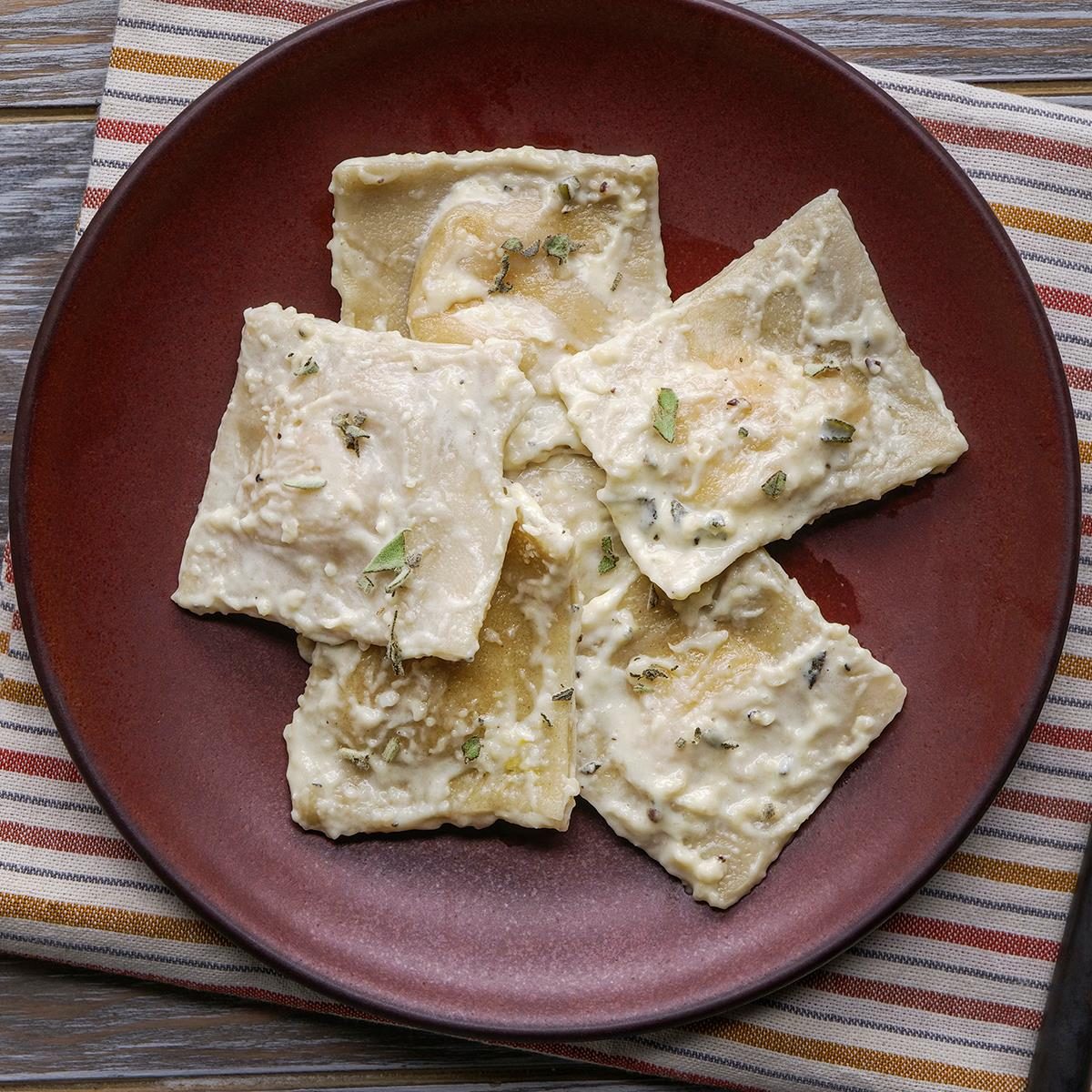
Take homemade pasta to the next level with this butternut squash ravioli in a cheesy garlic-sage cream sauce.
Butternut Squash Ravioli

Here’s a from-scratch fall or winter recipe that’s sure to impress everyone who tastes it—including yourself! Butternut squash ravioli features a rich, roasted filling made with roasted butternut squash, shallots and herbs. They’re blended with ricotta and cream to give the ravioli filling that silky texture you crave.
If you’ve never made your own pasta, you’ll be pleasantly surprised by how easily the dough comes together using just flour, eggs and olive oil. You can roll the dough out by hand or get out your fancy pasta machine. You may want to make butternut squash ravioli as the main dish for a cozy family dinner (since you’ll be putting in lots of effort for this pasta recipe!). But you can also serve them as an side to mains like cast-iron pan steak or a roasted pork loin. Either way, a fragrant Parmesan and garlic cream sauce is the perfect accompaniment to these filled pasta pockets.
Ingredients for Butternut Squash Ravioli
- Butternut squash: You can tell when a butternut squash is ripe when there are no green streaks on the skin. After you bring it home, peel it, slice it in half to remove the seeds, and then cube the flesh before starting this ravioli recipe.
- Shallot: This type of onion has a mild flavor that complements the other ingredients without overwhelming them.
- Seasonings: The butternut squash filling and sauce are flavored with fresh sage and thyme, as well as salt and black pepper.
- Heavy cream: The cream is blended with the squash to make the filling, and is used in the Parmesan pasta sauce, too. You can use whipping cream instead if you have it on hand.
- Olive oil: Toss the squash and shallot with olive oil so the veggie cubes roast up with lots of flavor. Since some olive oil is also incorporated into the pasta dough, use a high-quality brand of olive oil for this recipe.
- Flour: All-purpose flour is fine for the ravioli pasta dough. Sift the flour to remove any lumps.
- Eggs: Use large regular or organic eggs to make the pasta.
- Ricotta cheese: This type of cheese lends richness and creamy texture to the ravioli filling. Find ricotta in the dairy case at the store, or use your own homemade ricotta.
- Butter: Begin the savory sauce by melting a little butter. This is just another recipe that’s better with butter!
- Minced garlic: Get the best flavor with freshly minced garlic. Use tools like a Microplane rasp grater or a garlic press.
- Parmesan cheese: Finish the savory garlic sauce with a generous amount of grated Parmesan.
Directions
Step 1: Make the pasta dough

Preheat the oven to 425°F.
Add 2-1/2 cups of flour to a large bowl. Make a well in the center.

Beat the eggs, water and olive oil together in a separate bowl.

Pour the mixture into the flour well.

Stir the ingredients together until they form a ball.

Turn the dough out onto a floured surface and knead it until it’s smooth and elastic, about four to six minutes, adding the remaining flour if necessary to keep the dough from sticking. Cover the dough and let it rest for 30 minutes.
Step 2: Make the ravioli filling

Meanwhile, in a large bowl, combine the butternut squash, shallot, olive oil, fresh herbs, salt and pepper. Toss to coat, then transfer everything to a foil-lined baking sheet. Bake the vegetables until they’re tender, about 20 to 25 minutes.

Cool the vegetables slightly, then transfer them to a food processor along with the heavy cream. Cover and process them until they’re blended.

Transfer the mixture to a saucepan. Simmer it, uncovered, over medium heat for 15 to 20 minutes or until it’s thickened.

Let it cool slightly, then fold in the ricotta cheese.
Step 3: Roll and fill the pasta

Divide the pasta dough in half. On a lightly floured surface, roll one portion to a 1/16-inch thickness. Keep the pasta dough covered until you’re ready to use it.

Pipe the filling by the tablespoonful, 1 inch apart over half of the pasta sheet. Fold the sheet over and press it down to seal it.

Use a pastry wheel to cut the dough into filled squares.
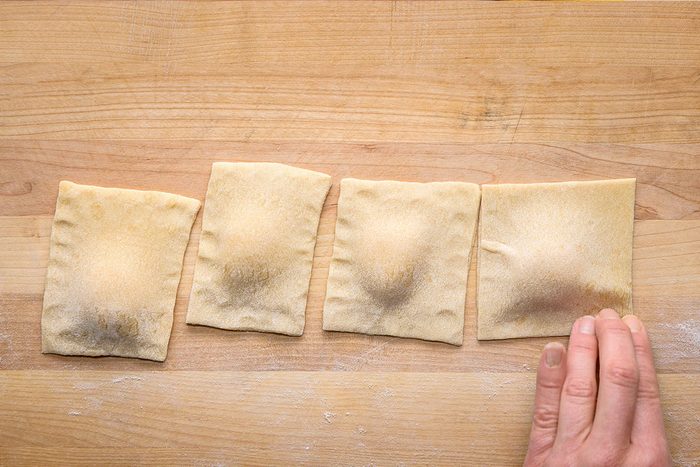
Press the edges to ensure a good seal. Repeat these steps with the remaining dough and filling.
Editor’s Tip: You can roll out the pasta by hand or try one of our top-pick pasta makers.
Step 4: Cook the ravioli

In a Dutch oven, bring salted water to a boil. Add the ravioli and reduce the heat to keep the water at a gentle simmer. Cook until the ravioli float to the top and are tender, about one to two minutes.
Step 5: Make the sauce
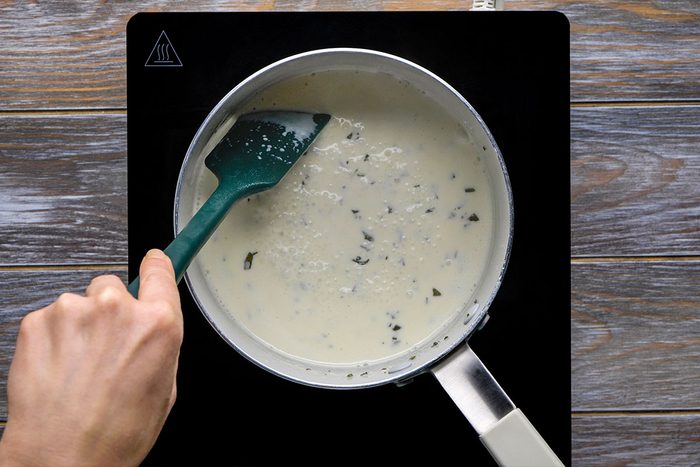
Meanwhile, in a small saucepan, melt the butter over medium heat. Add the minced garlic, and cook and stir for one minute. Gradually stir in the heavy cream and fresh sage. Bring the cream to a gentle boil. Reduce the heat and simmer the sauce, stirring constantly, until it’s slightly thickened, about three to five minutes.

Reduce the heat to low. Gradually whisk in the grated Parmesan cheese. Return the sauce to a simmer and cook it just long enough until it’s thick enough to coat a metal spoon. Stir in salt and pepper.
Step 6: Toss and serve
Strain the ravioli, add them to the cream sauce and toss to coat them. Serve the pasta while it’s hot.

Butternut Squash Ravioli Variations
- Add bacon: Cook, strain and crumble smoky bacon. Then, fold it into the butternut squash filling.
- Make the sauce with browned butter: Simmer the butter until it turns chestnut brown and has a nutty aroma. Then, proceed with the minced garlic and the rest of the ingredients.
How to Store Butternut Squash Ravioli
Allow the butternut squash ravioli to cool, then transfer them to a tightly sealed container and keep them refrigerated. If you haven’t tossed them with the sauce yet, store them separately.
How long do butternut squash ravioli last?
For the best quality and texture, your butternut squash ravioli and sauce should be enjoyed within two days. They’ll be safe to eat for up to four days.
Can you freeze butternut squash ravioli?
The butternut squash ravioli can be frozen once they’re assembled but before they’re cooked. Freeze the filled pasta in a single layer on a lined tray. Once they’re frozen solid, transfer the ravioli to a freezer-proof container or bag where they can be stored in the freezer for up to three months.
Cook the ravioli from frozen in salted, boiling water. Wait to prepare the Parmesan cream sauce until the day you cook the ravioli.
Can you make butternut squash ravioli ahead of time?
While the prepared, filled ravioli should be cooked and eaten within a day or two of making them, the components can be prepared separately ahead of time. Make the butternut squash-ricotta filling up to three days in advance. Allow it to cool, then store it in a tightly covered dish in the fridge. The pasta dough can also be prepared, wrapped tightly and refrigerated up to one day in advance. The Parmesan cream sauce can be held in the fridge in a covered container for up to three days ahead of time. Warm it up gently in a saucepan over medium heat.
Butternut Squash Ravioli Tips

Can you make butternut squash ravioli with store-bought pasta dough?
Yes, you can use premade pasta dough to save a little time when making butternut squash ravioli. Check the refrigerated case at your grocery store where fresh pastas are stocked; you should be able to find a national brand or locally-made pasta dough. Follow the recipe to roll out the dough and fill it to make the ravioli.
How can you thin out the sauce?
If the garlic Parmesan sauce becomes too thick on the stove, you can thin it with a splash of heavy cream or with a little chicken or vegetable broth.
What can you serve with butternut squash ravioli?
Try garnishing butternut squash ravioli with a sprinkle of crisp breadcrumbs or toasted walnuts. Roasted pepitas are also delicious as a crunchy topper. On the side, serve the ravioli with soft breadsticks, garlic toast or slices of focaccia. Butternut squash ravioli can also be served as a side with a meaty main dish like herb-crusted Italian pork loin.
Ingredients
- 2-1/2 to 3 cups all-purpose flour
- 3 large eggs
- 1/4 cup water
- 1-1/2 teaspoons olive oil
- filling:
- 2 pounds cubed peeled butternut squash
- 1 shallot, halved
- 1/3 cup olive oil
- 2 teaspoons minced fresh sage
- 3/4 teaspoon minced fresh thyme
- 1/4 teaspoon salt
- 1/4 teaspoon pepper
- 1/3 cup heavy whipping cream
- 1/3 cup whole-milk ricotta cheese
- sauce:
- 3 tablespoons butter
- 1 teaspoon minced garlic
- 1 cup heavy whipping cream
- 2 teaspoons minced fresh sage
- 1/2 cup grated Parmesan cheese
- 1/4 teaspoon salt
- 1/4 teaspoon coarsely ground pepper
Directions
- Preheat oven to 425°. Place 2-1/2 cups flour in a large bowl. Make a well in the center. Beat eggs, water and oil; pour into well. Stir together, forming a ball. Turn onto a floured surface; knead until smooth and elastic, 4-6 minutes, adding remaining flour if necessary to keep dough from sticking. Cover and let rest 30 minutes.
- Meanwhile, in a large bowl, combine squash, shallot, oil, sage, thyme, salt and pepper; toss to coat. Transfer to a foil-lined baking sheet. Bake until tender, 20-25 minutes. Cool slightly, transfer to a food processor along with cream. Cover and process until blended.
- Transfer mixture to a saucepan. Simmer, uncovered, over medium heat for 15-20 minutes or until thickened. Let cool slightly, fold in ricotta.
- Divide pasta dough in half; on a lightly floured surface, roll 1 portion to 1/16-in. thickness (or use a pasta roller). Keep pasta covered until ready to use. Pipe filling by tablespoonfuls 1 in. apart over half of pasta sheet. Fold sheet over; press down to seal. Cut into squares with a pastry wheel. Repeat with remaining dough and filling.
- In a Dutch oven, bring salted water to a boil; add ravioli. Reduce heat to a gentle simmer; cook until ravioli float to the top and are tender, 1-2 minutes.
- Meanwhile, in a small saucepan, melt butter over medium heat. Add garlic; cook and stir 1 minute. Gradually stir in cream and sage. Bring to a gentle boil. Reduce heat; simmer, uncovered, until slightly thickened 3-5 minutes, stirring constantly. Reduce heat to low.
- Gradually whisk in grated Parmesan. Return to a simmer. Cook and stir until just thick enough to coat a metal spoon. Stir in salt and pepper.
- <div data-original-title="" title=""> Drain ravioli; add to sauce and toss to coat.</div>
Loading Popular in the Community

