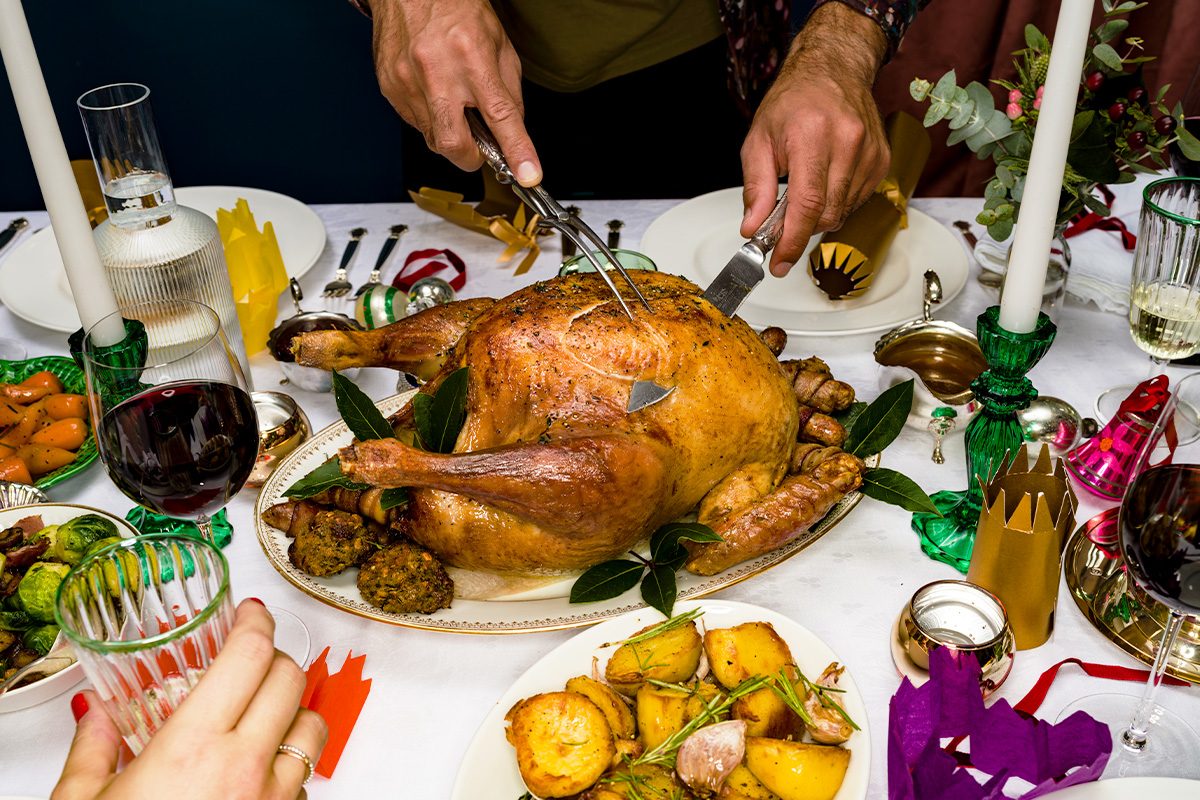
We asked Heidi Diestel of Diestel Family Ranch to share her best advice for cooking up the perfect Thanksgiving spread.
We’re a little less than a week out from Thanksgiving, so it’s time to talk turkey. The bird is the deserving centerpiece of any Thanksgiving spread, but roasting one for your holiday gathering can be an intimidating feat on a day already packed with a long list of culinary tasks.
That’s why we went straight to the source—fourth-generation turkey farmer Heidi Diestel of California-based Diestel Family Ranch—to gather her intel on how a family of turkey farmers plans and cooks for the food-centric holiday. She shared her tips and tricks on how to make your family’s Thanksgiving a success this year.
What are Heidi’s go-to turkey sides?

As you may have guessed, the Diestel family doesn’t just save the roasted turkeys for Thanksgiving day. They dine on the bird often throughout the year, enjoying different flavor profiles and recipes. But when it comes to the fourth Thursday of November, they always stick to their tried-and-true family recipe, as prepared by Heidi’s dad, Tim.
Sticking to tradition extends to the family’s spread of Thanksgiving sides, too. Their menu includes mashed potatoes, cranberry sauce, peas, rolls and Heidi’s personal favorite side: stuffing (or dressing, if you’re reading this in the southern United States). She’s a strong proponent of cooking the stuffing in the bird.
“We are stuffers because it has so much flavor,” Heidi told Taste of Home. “We do a dry stuffing with cubed bread that’s been dried out for days ahead of time so you don’t end up with this disintegrated dressing at the end of it. You have some of the crustier outside bits of the bread mixed with the inside bits.”
What is Heidi leaving off her Thanksgiving dinner plate?
While the family’s Thanksgiving spread always features a green salad, she admitted, “salad has no place on the plate for me” on this particular day.
“It’s there, we pay homage to it,” Heidi said. “Some people eat it, but it’s Thanksgiving. It’s a meat-and-potatoes kind of holiday.”
Does Heidi prefer a dry brine or a regular brine?
When it comes to the question of brining, Heidi said it’s not always necessary depending on the quality of the bird you’re roasting; premium birds should be plenty juicy and tender to begin with, so you shouldn’t bother with brining them.
If you’re looking for your bird to have a specific flavor profile—like a bourbon infusion or a citrus-forward preparation—brining is the only way to make that taste come through. If you’re roasting a conventionally-raised bird, brining will also improve the bird’s flavor and texture. And in any event, Heidi prefers a dry brine over a traditional one.
“I just don’t want to deal with all the water, and I haven’t found a brine recipe I’m absolutely in love with,” Heidi said.
What is Heidi’s top tip for Thanksgiving hosting?
For home cooks who might be hosting Thanksgiving and roasting their first bird this year, Heidi said her best advice is to keep it simple everywhere it’s possible.
This means streamlining the menu, leaning on guests to bring certain dishes like rolls or cranberry sauce, and even making and freezing certain dishes (like the gravy) ahead of time. And if you’re antsy about roasting a raw bird, you can cut your roasting time by buying a precooked turkey that you’ll simply need to reheat.
“At the end of the day, Thanksgiving is just about coming around a table to express gratitude and eat,” Heidi said. “I think we should take the pressure off ourselves and really just enjoy each other’s company.”
Related: