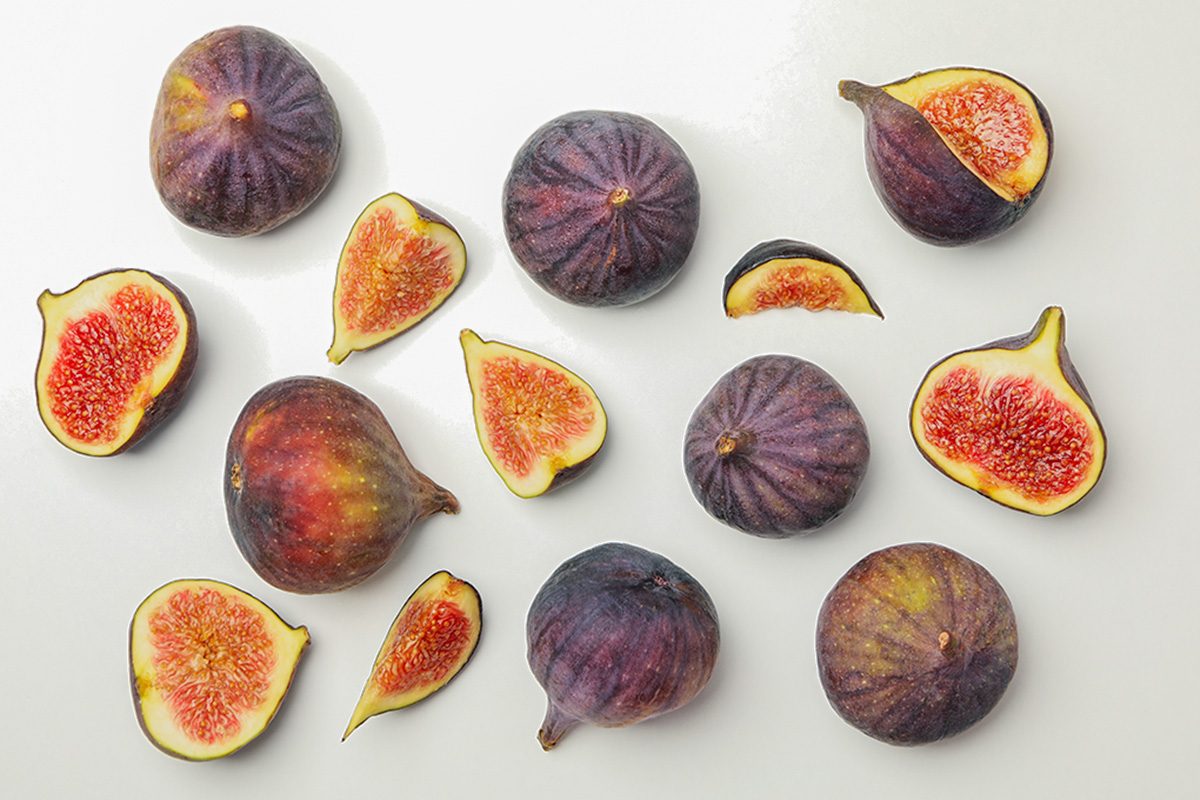
Fresh fig season is short, so don't miss out! Here's how to eat figs raw and the best ways to cook them for fig recipes.
Growing up, I didn’t have any concept of what a fig was, much less how to eat one. Fig was just a word I saw on the Fig Newtons package! I didn’t fully understand them until I was working at a farm-to-table restaurant and I ordered fresh-picked figs from a local farm. I was excited to create fig recipes but was a little overwhelmed. How in the heck do I eat this thing? Do I just take a bite out of it—raw, skin and all? Or, do I have to cook it first?
When I finally took a bite, I realized how different they were from dried figs or the preserves that go into fig-filled cookies. I learned that there’s no one set way to eat figs—you can enjoy them raw or cooked—but you’ll definitely want to do it fast. The season is incredibly short! You can enjoy dried figs all year round, but fresh figs are a seasonal delicacy that’s available only from late summer to early fall.
What are figs?

Figs are the edible fruit of the Ficus carica tree. Well, that’s not exactly true—technically, figs are an inverted flower, not a fruit (but it feels weird to refer to them as a flower!). Depending on the variety, the teardrop-shaped “fruit” is green or dark purple on the outside and pink or bright red on the inside.
One more weird fig fact: They have a symbiotic relationship with wasps, so you may have heard that you can eat a wasp inside a fig. That’s not as scary as it sounds, though. Most commercially produced figs come from California, where the trees are self-pollinating.
How to Eat Fresh Figs Raw
The best way to enjoy figs is raw, with the skin and seeds intact. They have a soft, jammy texture and a delicate, honeyed flavor that’s hard to beat. Simply run them under cold water to clean them, then pat them dry with a clean towel. Remove the stem and take a big bite.
To serve raw figs, slice them in half to expose the vibrant interior. I like to serve them simply with a dollop of soft goat cheese or a chunk of feta, but they’re also great as a garnish for salads or fig parfaits. They’re also a beautiful addition to any charcuterie board.
How to Cook Fresh Figs
Cooking figs will bring out their sweetness and make them extra-juicy, especially if they’re underripe. You can place halved figs directly onto a hot grill or cook them under the broiler to caramelize their sugars. Try serving them on toast for appetizers like ricotta crostini or use them as a topping for flatbread or grilled fig and honey pizza.
You can also bake figs in the oven to make double-nut stuffed figs, or simmer them with water and sugar to make fig preserves.
Ways to Eat Figs FAQ

How can you tell if a fig is ripe enough to eat?
You can’t tell when figs are ripe by the color (figs can be green or purple depending on the variety), so it’s best to go by texture. A ripe fig is soft and squishy, and the skin should pierce easily. When you cut into it, the inside should be soft and colorful. If it’s hard and white, the fig is probably underripe.
When buying figs, the first thing to look for is clean, unblemished skin. Skip any figs that have gashes or bruises on the flesh. If you give them a gentle squeeze, the fig should be soft (be careful here; it’s very easy to over-squeeze). The fig’s color will vary depending on the variety: Mission figs are deep purple, while Calimyrna figs are green and Kadota figs are yellow-green.
Can you eat the skin on figs?
Fig skin is edible, but some people are sensitive to the sap residue. I recommend soaking the figs in water for 20 minutes if you find the skin unpleasant. Of course, if you just can’t stand the texture, feel free to remove the skins with a vegetable peeler. I find that early-season figs have thin, delicate peels while late-season fig skins are thicker and more robust, so give the skin a taste before you go all-in.
How should you store fresh figs?
You can keep fresh figs on the counter at room temperature if you plan to eat them within a day or two. For longer storage, place them in a bag and keep them in the crisper drawer for up to a week. You’ll want to remove them from the fridge at least 30 minutes before eating, as they taste best at room temperature. Underripe figs can be stored at room temp until the flesh softens.